
NUTRITION
Ultra-processed food and the gut-brain axis: how workday snacks reshape a knowledge worker’s cognition
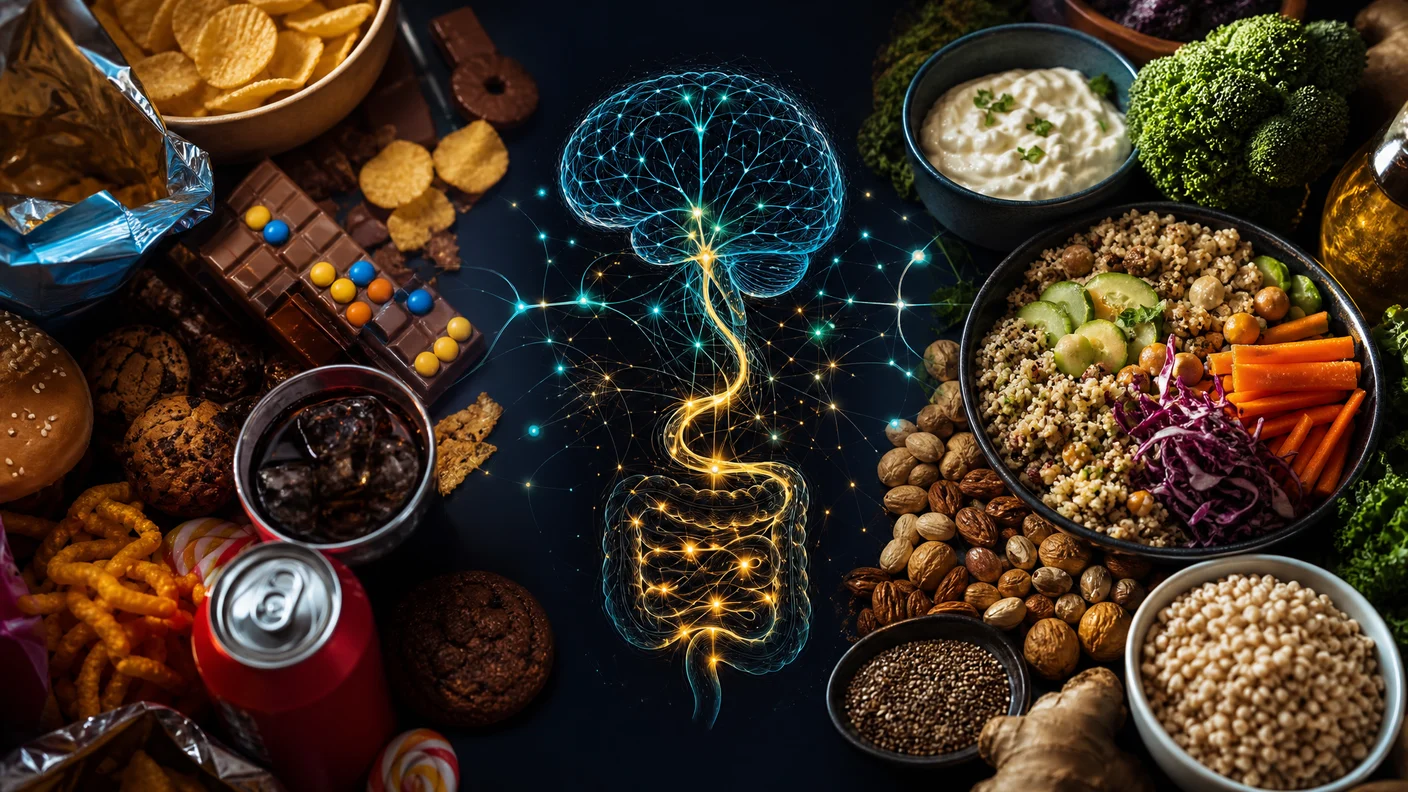
Explore how ultra-processed foods impact cognition and mood through the gut-brain axis, affecting knowledge workers’ performance.
In the fast-paced world of knowledge work, the convenience of ultra-processed snacks often overshadows their hidden costs to brain health. Emerging evidence reveals that these foods can degrade focus, mood, and long-term cognitive function by disrupting the gut-brain axis. Key mechanisms include microbiome depletion, reduced short-chain fatty acids, and low-grade inflammation (Gonçalves et al. 2022, Henney et al. 2023). Understanding these processes is crucial for professionals reliant on mental acuity. By examining the intricate connections between diet and cognition, we can better navigate our snack choices for optimal brain performance.
The gut-brain axis: your second brain steers focus
The gut-brain axis is a critical communication network linking the gastrointestinal tract and the brain, often referred to as the body’s ’second brain’. This axis plays a vital role in regulating focus and cognitive function. The microbiome, a diverse community of microorganisms in the gut, produces metabolites that influence brain health. One key group of metabolites, short-chain fatty acids (SCFAs), are crucial for maintaining cognitive function. However, ultra-processed foods can deplete SCFA-producing bacteria, leading to reduced cognitive performance (Fusco et al. 2023).
Low-grade inflammation is another mechanism through which the gut-brain axis affects cognition. Ultra-processed foods are often high in additives and low in fiber, which can disrupt the gut microbiome. This disruption may lead to inflammation that affects brain health, impairing focus and mood (Gonçalves et al. 2022). The vagus nerve, a major component of the gut-brain axis, can transmit inflammatory signals to the brain, further impacting cognitive function.
Evidence suggests that a diet high in ultra-processed foods is associated with cognitive decline and increased risk of dementia (Henney et al. 2023). By altering the gut microbiome and reducing SCFA production, these foods can impair hippocampal function, crucial for memory and learning (Dietary Fibre Intake and Hippocampal Grey Matter Volume 2025). Knowledge workers, whose productivity relies on sustained focus, may find that frequent consumption of ultra-processed snacks undermines their cognitive abilities.
- Incorporate more fiber-rich foods to support SCFA production.
- Limit ultra-processed snacks to reduce inflammation and support brain health.
- Consider probiotic supplements to maintain a healthy gut microbiome.
What ultra-processed food does to the microbiome
Ultra-processed foods, prevalent in many workday snacks, can significantly alter the gut microbiome, a crucial component of the gut-brain axis. These foods are often low in dietary fiber and rich in additives, which can disrupt the balance of gut bacteria. A healthy microbiome is essential for producing short-chain fatty acids (SCFAs), compounds that support brain health by reducing inflammation and maintaining the integrity of the blood-brain barrier (Fusco et al. 2023). When ultra-processed foods dominate the diet, the diversity and abundance of beneficial bacteria diminish, impairing SCFA production.
The reduction in SCFAs can have cascading effects on cognitive functions. SCFAs play a role in modulating inflammation, which is linked to cognitive decline and mood disorders. Low SCFA levels can lead to increased inflammation, potentially affecting focus and mood (Oluwagbemigun et al. 2022). This inflammatory response can also impact the vagus nerve, a critical communication pathway between the gut and the brain, further disrupting cognitive processes.
Long-term consumption of ultra-processed foods has been associated with cognitive decline and an increased risk of dementia (Henney et al. 2023). This is partly due to the chronic low-grade inflammation and microbiome imbalance they induce. Knowledge workers, who often rely on quick snacks, may unknowingly compromise their cognitive performance over time. By understanding the impact of these dietary choices, individuals can make informed decisions to support their brain health.
- Opt for whole foods rich in dietary fiber to support a healthy microbiome.
- Limit intake of ultra-processed snacks to reduce inflammation and support cognitive function.
- Incorporate fermented foods to enhance gut bacteria diversity and SCFA production.
Short-chain fatty acids, inflammation and cognitive performance
Ultra-processed foods can significantly alter the gut microbiome, impacting cognitive performance through reduced production of short-chain fatty acids (SCFAs). SCFAs, such as butyrate, are crucial for maintaining the integrity of the blood-brain barrier and modulating inflammation (Fusco et al. 2023). A decrease in SCFA-producing bacteria, often seen with high intake of ultra-processed foods, can lead to low-grade inflammation, which is linked to cognitive decline (Gonçalves et al. 2022). This inflammation can impair focus and mood, crucial for knowledge workers who rely on sustained cognitive function.
The gut-brain axis is a bidirectional communication system that is profoundly influenced by diet. SCFAs produced by a healthy gut microbiome play a pivotal role in this communication by interacting with the vagus nerve, which directly connects the gut to the brain (Oluwagbemigun et al. 2022). When SCFA levels are reduced, this interaction is disrupted, potentially leading to mood disorders and decreased cognitive flexibility. These changes can be particularly detrimental in high-pressure work environments where mental agility is essential.
Chronic consumption of ultra-processed foods can exacerbate inflammation, further impairing cognitive functions over time. Studies show that individuals with high ultra-processed food intake have a higher risk of dementia (Henney et al. 2023). This risk is partly due to the inflammatory processes that such diets provoke, highlighting the importance of dietary choices in long-term brain health. By prioritizing whole foods rich in dietary fiber, individuals can support a healthy microbiome and enhance SCFA production, which may protect against cognitive decline.
- Prioritize whole foods to support SCFA production and reduce inflammation.
- Understand the gut-brain axis’s role in mood and cognitive flexibility.
- Limit ultra-processed food intake to lower the risk of cognitive decline.
The evidence: ultra-processed food and cognitive decline
The consumption of ultra-processed foods has been linked to cognitive decline, particularly in knowledge workers who rely heavily on mental acuity. A study by Gonçalves et al. (2022) found that high intake of such foods was associated with poorer cognitive performance in a large cohort from the ELSA-Brasil study. Participants who consumed more ultra-processed foods showed a significant decline in executive function and memory over time. These foods often lack essential nutrients and contain additives that may disrupt the gut-brain axis, leading to impaired cognitive abilities.
The gut-brain axis is a critical pathway through which dietary habits influence brain health. Ultra-processed foods can negatively impact the gut microbiome, reducing the diversity and abundance of beneficial bacteria. Oluwagbemigun et al. (2022) highlighted that a depleted microbiome can lead to decreased production of short-chain fatty acids, which are vital for brain function. This reduction may contribute to low-grade inflammation and altered communication via the vagus nerve, further exacerbating cognitive decline.
In the context of long-term brain health, the role of dietary fiber cannot be overstated. A study published in Frontiers Nutrition (2025) demonstrated that higher dietary fiber intake is linked to increased hippocampal grey matter volume, a crucial area for memory and learning. The absence of fiber in ultra-processed foods deprives the gut of substrates needed for producing short-chain fatty acids, which play a protective role in brain health. This absence may accelerate neurodegenerative processes, raising concerns about the habitual consumption of such foods.
- Limit consumption of ultra-processed foods to support cognitive health.
- Incorporate fiber-rich foods to enhance gut microbiome diversity.
- Be mindful of the long-term impact of dietary choices on brain structure and function.
Limits of the evidence: association, not a verdict
While the relationship between ultra-processed food consumption and cognitive decline is compelling, it is crucial to recognize the limitations of existing evidence. Much of the research, including studies like Gonçalves et al. 2022, relies on observational data. These studies can highlight associations but do not establish causation. For instance, individuals consuming high levels of ultra-processed foods may have other lifestyle factors contributing to cognitive decline, such as reduced physical activity or poor sleep habits.
The gut-brain axis is a complex network influenced by numerous variables. Although studies like Oluwagbemigun et al. 2022 suggest a link between gut microbiome diversity and cognitive performance, the exact mechanisms remain under investigation. Short-chain fatty acids (SCFAs), produced by gut bacteria, are believed to play a role in maintaining brain health, yet the precise pathways and their impact on cognition are not fully understood (Fusco et al. 2023). This underscores the need for further research to clarify these intricate interactions.
Despite these limitations, the evidence suggests that dietary choices can influence brain health over time. Knowledge workers, who often rely on quick, ultra-processed snacks, should be aware of the potential long-term effects on focus and mood. While current studies do not provide a definitive verdict, they offer valuable insights into how diet may impact cognitive function. This understanding can guide more informed dietary decisions, promoting both gut and brain health in the workplace.
- Observational studies show associations, not causation.
- Gut-brain interactions involve complex and not fully understood mechanisms.
- Dietary choices can potentially influence long-term brain health.
A practical food strategy for the workday
For knowledge workers, the choice of snacks can significantly influence cognitive performance and mood. Ultra-processed foods, often high in sugars and unhealthy fats, have been linked to cognitive decline and increased dementia risk (Henney et al. 2023). These foods can disrupt the gut-brain axis by depleting beneficial microbiota and reducing the production of short-chain fatty acids, essential for brain health (Fusco et al. 2023). To maintain optimal cognitive function, it’s crucial to incorporate whole foods that support a healthy gut microbiome.
A practical approach to enhancing brain health through diet involves prioritizing foods rich in dietary fiber. Fiber not only supports gut health but also correlates with increased hippocampal grey matter volume, a region critical for memory and learning (Dietary Fibre Intake and Hippocampal Grey Matter Volume 2025). Foods like fruits, vegetables, and whole grains encourage the growth of short-chain fatty-acid-producing bacteria, which are vital for reducing inflammation and supporting brain function (Oluwagbemigun et al. 2022).
To implement this strategy, consider preparing snacks that combine fiber and healthy fats, such as nuts and seeds, which can be easily integrated into a busy workday. These choices help stabilize blood sugar levels, enhancing focus and mood. Additionally, fermented foods like yogurt or kefir can support a diverse gut microbiome, further strengthening the gut-brain axis. By making informed snack choices, knowledge workers can protect their cognitive health and improve workday productivity.
- Choose whole foods over ultra-processed snacks to support brain health.
- Incorporate fiber-rich foods to enhance hippocampal volume and cognitive function.
- Prepare snacks like nuts and fermented foods to stabilize mood and focus.

